


Combatting malaria
Over the last decade, funding to help countries to decrease the impact of malaria have increased significantly, especially by providing very large numbers of insecticide treated bed nets (ITN) to protect the most vulnerable, the children under five years of age and pregnant women. This has enabled more than a million lives to be saved and the number of people who become sick or die from malaria has decreased by a third in sub-Saharan Africa. However, not everyone likes to sleep under a net and as houses are very seldom screened to prevent mosquitoes entering their houses, some countries have now campaigns to spray the inside walls of houses, as recommended in the early days of vector control using DDT. While DDT has been used again in some areas, a pyrethroid spray has dominated the Indoor Residual Spray (IRS) programmes, so mosquitoes are not surprisingly becoming resistant to this class of insecticide. At the same time a large number of treated nets are reaching the end of the effective life and will need replacing.

Clearing a ditch in Zambia, to ensure water flows freely and does not become a breeding ground for mosquitoes. (Source Peter Mukuka, Copper Mine)
If we look back to the period when DDT was extensively used to control malaria vectors, there was a similar concern when the mosquitoes became resistant to the DDT. Sadly then, the only reaction with limited funds was to stop vector control and rely on drug treatment, but the malarial parasite became resistant to chloroquin. A recent review ( Cohen et al, 2012) shows how the incidence of malaria rapidly increased once vector control was no longer maintained. In one example in Garki, Nigeria indoor residual spraying was done with fenitrothion and propxur as alternatives to DDT but as soon as the spraying was stopped the prevalence of malaria parasites increased from <5% to around 50% (Fig. 1) (Molineux and Gramicia (1980).
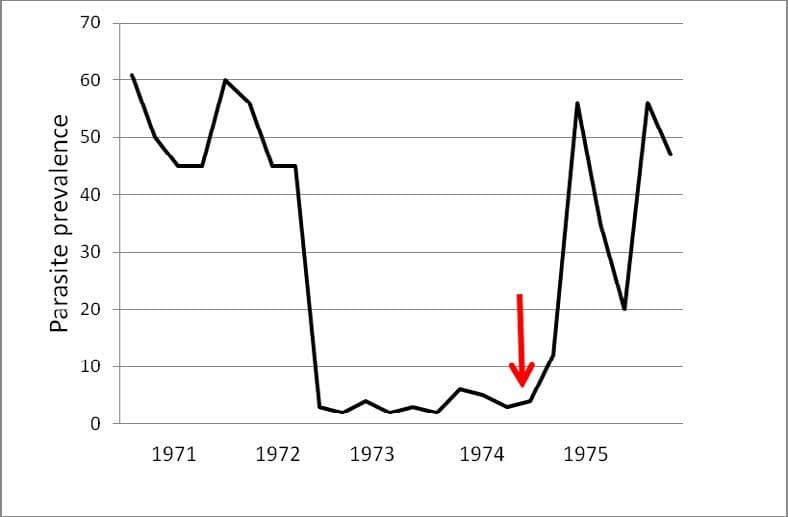
- Fig 1 The prevalence of the malaria parasite in the Garki Project, Nigeria. Arrow shows when the spraying was stopped.
Looking again historically, the most successful campaigns against malaria were prior to the availability of DDT and these relied on drainage of swampy areas, such as in the Pontine marshes, near Rome and also in Palestine and the Tennessee Valley, USA, in which the mosquito larvae were able to breed. They also encouraged house owners to screen doors and windows to stop mosquitoes entering the houses, and where land could not be drained, they developed control systems to limit areas that remained sufficiently wet for larvae to develop by controlling water levels or applied larvicides, notably in those days using Paris Green (Gatrell et al., 1981). Even today extensive areas of the USA are treated with larvicides to control “nuisance” mosquitoes, even though malaria is not present, although in the last decade the arrival of West Nile Fever has emphasised the importance of vector control.

The Wheeler Dam which was constructed by the Tennessee Valley Authority. The design was changed right at the beginning so that the height of the gates would allow seasonal and periodic fluctuation of the water level to maintain a clean shore line less suitable for mosquitoes to breed (Bishop, 1936)
The time has come to look at mosquito control more holistically and not rely on one method of control, especially as resistance will recur even if different insecticide sprays are applied. Unfortunately many living in sub- Saharan Africa are living in poverty and cannot afford to buy the screens to protect their houses from entry of mosquitoes. However much could be done to encourage governments to get suitable materials in villages and encourage house improvement. Many gaps in the walls of houses could simply be filled with mud and by using old bed nets to cover the open eaves.
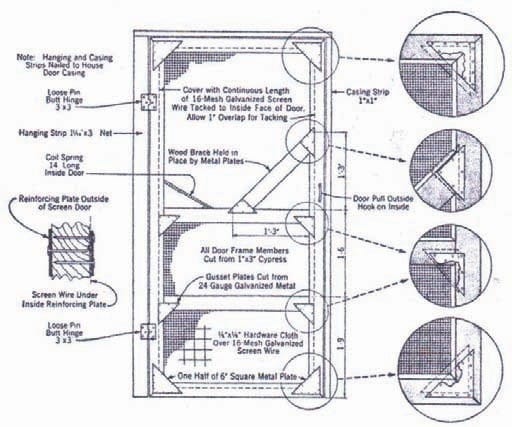
Tennessee Valley Authority advice on the construction of screened doors to stop mosquitoes entering their houses.
Implementing integrated vector management will however require the various Ministries – Health, Agriculture, Water Resources etc. of these countries to work together in the same way that the Tennessee Valley Authority enabled development in the USA in the 1930s. In areas where rainfall is restricted to part of the year, attention to drain- age is needed in the period immediately before and after the initial rains to minimise initial breeding once the rains start. Effective control of relatively low mosquito populations at the start of the wet season should minimise population growth later. At villages, training of a small Vector Intervention Team can coordinate efforts to ensure the most vulnerable are protected by bed nets but also assist with implementing other control tactics. In areas of rainfall throughout the year, drainage schemes will need to be carefully designed. What is most important is that efforts are needed to avoid the resurgence in malaria, once resistance to the presently recommended insecticides fails. This will require a more holistic approach with more collaboration between the organisations in each country that have a key role to play.
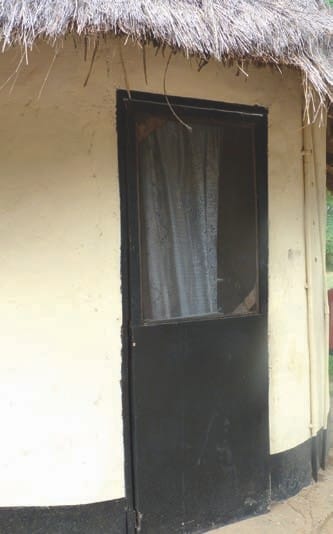
Partly screened doorway in The Gambia
References
Bishop, E.L. (1936) Malaria-control activities of the Tennessee Valley Authority. Public Health Reports (1896-1970) 51, No 29. 970-9.
Cohen, J.M., Smith, D.L.,Cotter,C.,Ward, A., yamey,G.,Sabot,O.J. and Moonen, B. (2012) Malaria resurgence: a systematic review and assessment of its causes. Malaria Journal, 11:122.
Gatrell, F.E., Cooney,J.C., Chambers, G.P. and Brooks, R.H. (1981) TVA mosquito control 1934 -1980 experience and current program trends and developments. Mosquito News 41, 302-22.
Molineux L. and Gramicia, G.(1980) The Garki Project. WHO Geneva.
Published in International Pest Control – July/August 2013 issue
Author: Graham Matthews
IPARC Imperial College, Silwood Park, Ascot, United Kingdom.
Category: Public health