


Reducing the incidence of malaria: Are we adopting the right approach?
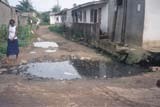
Long term puddles in urban areas in India and Africa (Cameroon) caused by poor drainage encourages mosquitoes!
Once indoor residual spraying (IRS) was considered to be the answer for the control of the malaria vector, Anopheline mosquitoes, as it drastically reduced the number of cases of malaria, when DDT was applied to wall surfaces. When the mosquito vectors became resistant to DDT, the policy of IRS was dropped and eventually replaced by the distribution of insecticide treated bed nets (ITN). The widespread distribution of the longlasting insecticide treated bed nets has undoubtedly reduced the number of young children dying – the most susceptible to malaria – but these nets were more widely distributed the number of people infected by malaria did not fall in the same way. This is undoubtedly due to the fact that people remain active, even inside houses until late in the evening and thus, not being under a net throughout the period when the Anopheles mosquito bites. Now with more widespread distribution of these nets on which the pyrethroid insecticide remains active for 3-5 years, mosquitoes are showing resistane to this group of insecticides. There is also a problem of disposal of old or torn nets that are no longer effective.
The manufacture of long-lasting insecticide bed nets seemed a wonderful solution as a net would not require periodic treatment by the owner of the net, but as the deposit impregnated into the net fibres is persistent for several years, the selection pressure for resistance continues even when mosquito populations are low during the dry season.
This is a preview of a full article published in International Pest Control – January/February 2014 issue.
View full article online
The full text of this article is available to subscribers of International Pest Control.
Subscribe for online access
Subscribe to International Pest Control for full online access to all articles in every issue since 2004.
Author: Prof. Graham Matthews – Imperial College, London & Technical Consultant – International Pest Control
Category: Public health, Special features