


Improved plant health through nutrient uptake from foliar feeding
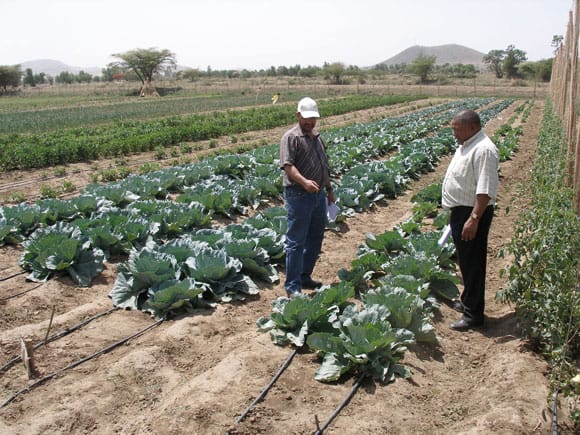
Brassicas possess an inherently waxy cuticle. Head cabbage should be sprayed from above (rather than from the side) to avoid a ‘shadow effect’ where one side is not covered (Picture Omex)
Inadequate uptake of specific nutrients, especially at high physiological demand times, can potentially cause well-established and wide ranging physiological syndromes, with symptoms specific to the crop and the nutrient in question. However there are well-established extra disease dimensions where microbial pathogens can take advantage of a weakened and damaged plant structure.
While sustained soil fertility is the foundation of plant nutrition, foliar feeding is the most timely and targeted way to apply nutrients and are crucially an important complement. Foliar feeding can short-circuit any lock up of soil-based nutrients, correct specific nutrient deficiencies, provide required nutrients at physiological ‘demand times’ (e.g. flowering and fruit formation) and facilitate fast fulfilment of poorly mobile nutrients like calcium.
Foliar feeding is recognised as the quickest and most effective route to a balanced plant nutrition and uninterrupted production of sugars, especially during nutrient stress, created by drought or the need to stimulate rapid new root and shoot growth, on small transplants in the field. In this context, foliar feeding is not about addressing shortfalls and deficiencies in specific nutrients through the application of relatively large amounts, but supplying a nutrient profile ‘little and often’ to maintain plant health.
This contrasts with the application of nutrients with higher specific analyses, custom designed and applied to correct deficiencies, identified by plant and soil analysis. For example, if plant analysis reveals manganese (Mn) is low or deficient (even when soil manganese appears adequate), then prompt pro-active foliar application can boost bio-available Mn.
Pro-active foliar feeding based on plant and soil analysis and soil-crop history furnishes the required nutrient(s) before plants start to show deficiency symptoms. Benefits are especially big if applications are made before the onset of ‘demand times’, when nutrients can drop to deficient levels. Pro-active foliar applications supply sufficient nutrient(s) to the plant before any crop quality and production problems come into play.
Rapid and targeted uptake of nutrients via foliage enables farmers and growers to stop ‘simple’ nutrient deficiency syndromes like ‘blossom end rot’ of tomato and capsicum pepper fruit, triggered by calcium deficiency, from developing into plant disease problems after microbial pathogens exploit the weakened and damaged tissue.
Some scientists differentiate between ‘foliar feeding’ and ‘leaf feeding’. Foliar feeding describes the use of products of higher specific analysis to address and remedy specific nutrient requirements and shortfalls. Leaf feeding is defined as the use of foliar fertilizer to achieve and maintain balanced plant nutrient status and sound plant nutrition. Successful foliar feeding requires a profound understanding of formulation, spray application, canopy characteristics and plant surface (Mabbett, 2012) and the micro mechanics of nutrient uptake across plant surfaces.
This is a preview of a full article published in International Pest Control – March/April 2013 issue.
View full article online
The full text of this article is available to subscribers of International Pest Control.
Subscribe for online access
Subscribe to International Pest Control for full online access to all articles in every issue since 2004.
Author: Dr Terry Mabbett
Director, Dr Terry Mabbett Consultants
Category: Agriculture