


Comparison of efficacy and attractiveness of five commercial cockroach control gel formulations in laboratory tests
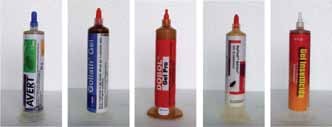
We report the results achieved in laboratory tests conducted to compare the efficacy and the attractiveness of commercial gel formulations, containing abamectin, fipronil, indoxacarb, acetamiprid and imidacloprid, for the control of nymphs and adults of cockroaches.
The tests were replicated 4 times and were carried out by in special arenas of 1 sq.m surface each; Blattella germanica (L.), Periplaneta americana (L.) and Periplaneta australasiae (F.) were the species considered in the study. In particular Periplaneta australasiae settled recently in several cities in Italy, probably due to the importation of food from the South-East Asia and sold in speciality stores.
 Introduction
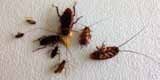
Blatta orientalis (L.), Blattella germanica (L.), Periplaneta americana (L.) have long been established in Italy in food industry and restaurants, while Supella longipalpa (F.) is to be found more easily in houses. Recently, Periplaneta australasiae (F.) has been found in different locations and must now be regarded as having settled in Italy (Dutto and Suss, 2013).
The control technique for these insects has gradually evolved from generalized treatments, to localized operations with the arrival of gel formulations. Several insecticides gel formulations have proven effective against cockroaches. In particular abamectin (Koeler et al., 1991; Rose, 1993); fipronil (Kankeh et al., 1997); imidacloprid (Appel and Tanley, 2000); indoxacarb (Dangsheng Liang, 2005). These last substances showed variable levels of efficacy according to different palatability and compatibility to the active ingredients; in some cases they showed aversion to specific active ingredient and vice-versa.
 The use of gels has long been studied. Several authors have presented results achieved in the laboratory as well as in real environments with reports covering; consumption of bait; food competition favored by debris in the environment; efficacy of different formulations; and insecticide activity on different strains of cockroaches (Appel et al., 2000; Changlu Wang et al., 2004; Dangsheng Liang, 2005). Comparative data of different gel efficacies in respect of a single species of cockroach have been also provided (Appel and Tanley, 2000). Since we can consider that these gel formulations can be used also for the control of P.australasiae, with this study we wanted to test in the laboratory if there is difference in efficacy and speed of action in the comparison of 5 gel formulations currently available in Italy………………
This is a preview of a full article published in International Pest Control – September/October 2014 issue.
View full article online – http://international-pest-control.com/view-ipc-online/
The full text of this article is available to subscribers of International Pest Control.
Subscribe for online access
Subscribe to International Pest Control for full online access to all articles in every issue since 2004.
Authors: Luciano Süss, Stefano Cassani, Guglielmo Cassani, Francesca Rosazza, Francesco Gallizia*
*Laboratory of Applied Entomology AGROBLU srl, Via Isonzo 20 – 20089 Rozzano (Milano), Italy
Category: Public health