


International news in brief – September/October 2014
-
UK: Chalara is quietly spreading
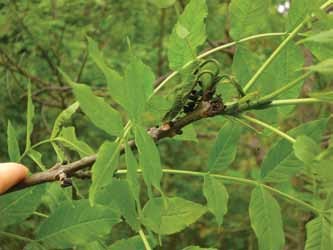
Chalara Ash Dieback continues to spread in UK. Photo courtesy of the Forestry Commission
The Chalara fraxinea surveying season for 2014 arrived in the United Kingdom (UK) with ascospores airborne and the Forestry Commission’s (FC) plant health survey teams looking for and recording outbreaks of the disease. And they are apparently finding many diseased ash trees (Fraxinus excelsior) this year and in new places too despite recent comments that spread of Chalara Ash Dieback had slowed.
The total number of confirmed caseshad been stuck at around 660 for months until surveying was resumed in July 2014. By August 4th, some 20 new ones had been added to FC’s chalara distribution map. Almost all are in the wider environment and include one in Bristol, two on the Hampshire/Surrey border near Farnham and a 10-outbreak cluster in Lancashire around Burnley, Blackburn, Preston and Clitheroe.
This cluster of confirmed cases in Lancashire is the first wider environment outbreak of Chalara Ash Dieback. By 11th August another 17 wider environment outbreaks had been confirmed, all in Northumberland and the Scottish Borders. 36 more outbreaks were confirmed on 26th August with outbreaks in East Sussex and Surrey doubled to 20 with two additional outbreaks for the first time in neighbouring Hampshire. Lincolnshire outbreaks grew from 5 to 15. The majority of the remaining new outbreaks were in Kent, North Norfolk and the Northumberland/Scottish borders region.
These new outbreaks have not drawn any comment from the UK plant health authorities or received any coverage from the media. Is the now disease endemic and beyond control?
-
Nigeria: Engineers partner IITA to halt devastation by weeds
Efforts to control weeds in cassava farms received a boost with Nigerian engineers joining forces with experts from the International Institute of Tropical Agriculture (IITA). The team who are exploring mechanical weeding options used elsewhere in the world, intends to build on present motorised weeding equipment already available in the market by studying their limitations in the African farming context, understanding those limitations and modifying the equipment for maximum efficiency. Alfred Dixon, project leader for the Cassava Weed Management Project, described the partnership as a key milestone that would redefine mechanical control of weeds in crops such as cassava.
Accounting for 50%-80% percent of the total labour budget of cassava growers, weeds are major disincentives to African farmers and with traditional agriculture still predominant, women and children bear the brunt of weeding investing between 200 and 500 hours per hectare annually in clearing weeds to prevent economic root losses in Nigeria. Launched early this year, the Cassava Weed Management Project is confronting the problem of weeds on several fronts including the use of best-bet agronomic practices by combining improved cassava varieties with proper planting dates, plant populations, plant nutrition options and also focusing on inter-cropping and tillage research. The integrated weed management approach of the project also includes the use of herbicides that meet globally accepted conventions and safety thresholds appropriate for smallholder farmers.
Source: http://bit.ly/1nHWnYX
-
US: New Service Pro module for ServSuite
Service Pro has released the ServSuite Notifications Module which allows service companies to notify their customers of impending services. Notifications are an automated Call Ahead feature that provides customizable pre-recorded service reminders to help users confirm service calls.
This module provides the functionality to call all, or a group of customers, right from ServSuite, saving time and alleviating the need to call each customer separately. This easy accessible and highly advantageous feature can be found under “Notifications” between the “Modules” in the ServSuite user home page. Here users can choose a notification type such as a phone call or SMS text message. The module will allow users to schedule the date and time of their notification. The outgoing message can be viewed as a read-only field. Pending Notifications can be viewed in a Preview Notifications List.
For more information visit: www.ServicePro.com.
-
Uganda: Those who misuse mosquito nets to be jailed
In concluding the exercise of theUniversal Distribution of FreeMosquito treated nets in Uganda, President Yoweri Museveni has issued a strong warning that anybody who will be found misusing the nets, for either catching white ants or fish, will be arrested and sent to jail.
The largest campaign of the distribution of long lasting insecticide treated nets in the world was launched by President Museveni in May 2013 with the Police and the Army helping in the successful distribution of the nets.
President Museveni also urged all Ugandans to cooperate in eradicating the malaria scourge in the country. He pointed out that the 3 elements of containing the pandemic is by applying the prevention and better than cure method of using treated nets, indoor residual spraying and to get treatment once one is infected. “I last suffered from malaria in 1984 during the last days of the bush war. I always use the prevention is better than cure method by protecting myself from mosquito bites. The nets protect you from mosquito bites and also kill them. Always treat yourself to save life and not to allow your body to be a reservoir for malaria parasites,” he counseled.
Source:
-
UK: Single monitoring solution for all major fabric pests
Moth and beetle larvae feed on a wide variety of materials and some can digest keratin, which is a protein found in hair, horns, wool, fur and feathers and they can also
be attracted to other materials, even synthetics particularly if they have been contaminated by perspiration or food. Larvae are capable of causing holes and bare patches when feeding on these components.
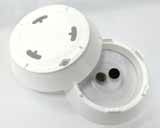
Xlure-FIT is a new multispecies insect trap from Russell IPM
Traditional prevention tools were tablets, flakes or crystals containing chemical pesticides; some are still available although others such as dichlorvos (DDVP) have been banned in the EU and the US due safety risks. Glue board style blunder traps, are traditionally used but these do not specifically attract the target species, instead can collect dust and other debris and need replacing frequently.
Xlure-FIT is the new multispecies insect trap from Russell IPM and is a pheromone trap that monitors the multiple pest species at once: Webbing Clothes Moth (Tineola bisselliella), Case-Making Clothes Moth (Tinea pellionella), Black Carpet Beetle (Attagenus unicolor), Varied Carpet Beetle (Anthrenus verbasci). The trap is designed for use in homes, apartments, retail and manufacturing clothing premises and anywhere these insects are a problem. It is a plastic, floor based trap which can be tethered in place and it permits monitoring more effectively to identify infestations before they become established. For beetle species, the surface of the FIT has a rough finish replicating the crack-like harbourages attractive to crawling insects. Male moths, meanwhile, enter by keyholes on the upper surface and are trapped inside.
For more information visit: http://russellipm-storedproductsinsects.com/en/trap/xlure-fit
-
Luxembourg: New novel leak-proof, UN-compliant closure for all types of agrochemicals
 Procap, a major European manufacturer of plastic caps and closures is introducing the 63 Proslit, a standard, secure TE closure for HDPE, Co-ex and PET containers with a 63mm neck finish. The innovative closure has been specifically designed for larger agrochemical containers and was first showcased during Interpack 2014, in Dusseldorf in May.
The closure features a totally new type of TE band – a folded snap/slitted flexband – which helps prevent counterfeiting, thereby protecting the chemical product brand. It is also highly tolerant toward differences in container neck finish, with bridges that break on first opening.
Fully UN compliant, its standard multi-layer foam disk liner provides a reliable seal and full chemical barrier for water-based or solvent-based products, whether they are powders or liquids.
Even on reclosure, the container maintains a complete seal. The new closure complies with UN specifications for closures without a traditional Induction Heat Seal (IHS) liner and can be used with a wide range of IHS and PE foam liners.
It has been specially designed to include a handy integrated foil cutter to make the incision of foil seals much easier. The closure is highly resistant to stress cracking even at elevated initial screwing torque following filling (>10,0Nm).
For more information visit: www.procap.com
-
UK: Chemicals Regulator to present at BCPC
This year’s BCPC Congress at Brighton – “European Regulatory Affairs: Precaution or innovation?” will now include an informative UK Health and Safety Executive (HSE) keynote presentation, followed by a question and answer session. Sarah Shore, Head of Biocides, Pesticides and Environment from the Chemicals Regulation Directorate(CRD), HSE, will present on “HSE as a modern regulator of Plant Protection Products under Regulation 11107/2009”.
This will be a unique and extended session for all those interested in hearing, and discussing first-hand, how CRD is managing the implementation of the Regulation. The session will take place at the end of day one of the Congress from 16.45 to 18.30, and is open to registered delegates for theCongress.
The BCPC Congress 2014 is organised by BCPC in association with TSGE Forum, with headline sponsor JSC International Limited. It will take place at the Hilton Metropole, Brighton, UK on 30 September – 1 October 2014.
-
UK: Vamousse® head lice products coming to a supermarket near you
TyraTech, Inc. (AIM: TYR and TYRU), a life sciences company focusing on nature-derived insect and parasite control products, is pleased to announce that it has secured product listings for its Vamousse head lice product range, including its Vamousse Treatment mousse and Vamousse Protection shampoo, in Sainsbury’s and Tesco stores in the UK. These listings are in addition to those previously announced in respect of Superdrug and Boots and it is anticipated that the first products will appear in UK stores in September.
A UK wide advertising campaign for the Vamousse product line will support the UK expansion. The campaign has been launched to coincide with beginning of the new school year.
In the USA, Vamousse is stocked in over 4000 Walmart stores and is available through online retailers Walmart.com, Amazon.com, drugstore.com, and Walgreens.com. the products are now available through extended distribution through one of the major pharmaceutical distributors, McKesson, as well as with independent pharmacy retailers, including Rochester Drug, Lewis Drug and Bartell Drug.
Bruno Jactel, Chief Executive Officer, said: “We are very pleased to have secured, in a short period of time and ahead of the lice season, the inclusion of our Vamousse product range in a number of the major distributors in the pharmacy, health and beauty, and grocery distribution channels in the UK market. In addition, we are extending our distribution network in the USA online and through a network of independent pharmacies”.
-
US: New Purdue guide helps farmers control pests in hops
Farmers requiring in-depth information on how to protect hops from weeds, diseases and insects can find information on integrated pest management in a new Purdue Extension guide. The Integrated Pest Management Guide for Hops in Indiana 2014 lists pesticides registered for hops in Indiana as well as seven tables of information detailing herbicide, disease and insect information essential for growers to choose which practice is right for their hops operations. The guide was compiled by members of the Purdue horticulture and landscape architecture and entomology departments as part of their research and extension project on hops production in Indiana. The publication highlights specific threats and treatments in each of three areas:
Weed management: Contains information on mechanical and chemical methods of weed protection and a table of information on various herbicides.
Disease management: Points out the most threatening diseases to hops production such as powdery and downy mildew. This section explains chemical, cultural and mechanical ways to control diseases and contains three tables expanding on various fungicides.
Insect management: Consists of guidelines for choosing the correct insecticide and notes products in two tables, showing which insecticides work best for particular insects.
The publication is available free for download in Purdue Extension’s The Education Store. Search for publication ID-462-W. Or go direct to
-
UK: The hunt for pathogens in oilseed rape
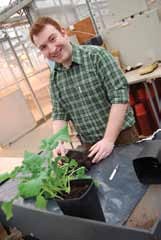
Alex McCormack hopes that it will be possible to facilitate management plans for oilseed rape pathogens, particularly the complexes that are formed between nematodes and fungi.
A group of plant pathologists at Harper Adams University are hoping to identify the importance of pathogens commonly found in oilseed rape (OSR) fields, and their role in yield loss.
The investigation, led by postgraduate researcher, Alex McCormack, will assess the distribution of six soil-borne pathogens and one type of nematode, and identify their contribution to the decline in crop yields.
Alex from North Yorkshire, said: “Despite recent advances in crop breeding and management to combat the effects of tight crop rotations, OSR yields have failed to rise. “One reason for this is thought to be the build-up of pathogens such as fungi and nematodes which cause crop losses. “Our research has two sections – one is a nationwide survey to assess the distribution of the pathogens, using molecular techniques to screen root samples provided by growers and industrial partners. “The second part of the work is to take the pathogens most commonly found within the samples, and examine them in glasshouse and field conditions. “This is to identify their contribution to yield decline both individually and also when combined, as when together, they form synergetic disease complexes which may significantly increase their impact on the crop.”
Alex is working alongside members of the plant pathology team at Harper Adams, including Deputy Vice Chancellor, Professor Peter Mills, Professor of Plant Pathology, Simon Edwards, and is being supervised by Dr Matthew Back who has previous experience with nematode-fungus disease complexes.
-
IGEBA introduce a new cold fogger
 This coming autumn, the company IGEBA Geraetebau GmbH will present the UNIPRO². This new ULV Aerosol Generator carries the concept of the UNIPRO 5 forward and offers additional benefits as well as a wider application spectrum in the fields of disinfection, pest control or improvement of indoor climate.
The modular system offers increased flexibility for the different types of application. Made of stainless steel, the device is acid resistant and can therefore be placed directly in the treated environment. It is the sixth model in the range of electrical IGEBA ULV Aerosol Generators.
The basic model is equipped with interfaces for the later addition of accessories, such as a timer, a hose extension or a bigger solution tank.
As with previous models, the company has attached high importance to an optimal droplet spectrum for increased efficiency and quality.
For more information contact: Alberto Sabatini, sabatini@igeba.de.
-
And finally……?
Spotted on Twitter in August
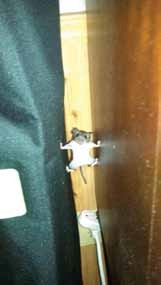
Mice-ion impossible
Published in International Pest Control – September/October 2014 issue
Category: International Pest News, news in brief