


International news in brief – January/February 2014
-
Australia: Border immigration and snakes on a plane
The Operational Science Program (OSP) within the Department of Agriculture uses entomologists and plant pathologists across Australia to identify pests and diseases detected by frontline biosecurity officers.
A Mandarin rat snake (Euprepiophis mandarinus) was found on a Qantas plane at Sydney Airport. Coming from Asia, exotic reptiles of this kind can harbour pests and diseases and pose a significant threat to Australia’s agricultural industries, environment and economy. Biosecurity officers also specifically targeted goods from Hungary, Poland and Malaysia.
Among seizures, staff detected two exotic pests on live plants, including a Djenkol weevil (Tryphetus incarnates) found on Jengkol beans. The exotic pest is found in Thailand. Its larvae feed on the seeds which are contained within the Jengkol pods. The adult beetles emerge from the beans after about one month of development and live for a further 7 – 10 weeks. Finally a Chinese land snail Metodontia yantaiensis was found on a shipping container in Darwin.
The snail, never encountered in Australia before, has the propensity to survive there. After the detection, the container had a six-sided wash and a reinspection to ensure that there were no more snails or other risk materials. The container was then salt ringed, to hold and prevent any other possible snails from escaping.
For more information see:-
http://www.daff.gov.au/biosecurity/about/reports-pubs/biosecurity-bulletin/2013/edition-3
-
Dubai: Aphanius dispar fish to assist in effective mosquito control
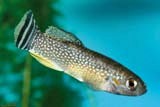
The Desert Killifish Aphanius dispar has become a tool for the Dubai Municipality Pest Control Department in combating mosquito larvae.
The Desert Killifish Aphanius dispar has become an eco-friendly and economical tool for the Dubai Municipality Pest Control Department in combating mosquito larvae and save millions for the civic body’s fight against mosquitoes in farms and water bodies. Officials estimate the fish will help save Dh3.5million when bred in about 1,400 farms and nearly 300 water bodies in the emirate, instead of using chemical pesticides that can harm the environment and human beings.
The project won the ‘best suggestion award’ in the field of green applications at the second UAE Ideas Conference 2013. “There are areas where stagnant water collects because of the flow of groundwater, rain, artificial lakes and water leaks from sewage, which lead to mosquito breeding in these areas as well as in irrigation tanks,” Hisham Abdul Rahman Yahya, head of Pest Control Section said in a Press statement. It is important that fish breeding is done regularly to maintain the benefit of the project.
Soucre: Khaleej times.
-
US: EPA awards almost US$0.5m to reduce pesticide risk including risks to bees
The U.S. Environmental Protection Agency (EPA) will award three universities agricultural grants for Integrated Pest Management (IPM) practices to reduce the use of potentially harmful pesticides and lower risk to bees all while controlling pests and saving money. These grants will expand public-private stewardship efforts and reduce pesticide risk in agriculture. The Agricultural IPM Grants are awarded to:
- The Pennsylvania State University project to protect bees and crops by reducing reliance on neonicotinoid pesticide seed treatments and exploring the benefits of growing crops without them. IPM in no-till grain fields will be used to control slugs and other pests that damage corn and soybeans.
- The Louisiana State University project to minimize impacts to bees from insecticides used in mosquito control. Mosquito control is critical for public health; however, insecticides can be hazardous to bees. Bees are essential for crop production and ensuring a healthy food supply.
- The University of Vermont project to reduce pesticide use and improve pest control while increasing crop yields on 75 acres of hops in the Northeast. The project’s goal is to reduce herbicide and fungicide applications by 50 percent while decreasing downy mildew, a plant disease.
For more information on the EPA’s Regional Agricultural IPM Grants: http://1.usa.gov/1eGsjsM
-
Netherlands: Dutch lead the way in potato cyst nematode control
Potato nematodes (PCN) are now a minor pest threat in the Netherlands. The potato pest was discovered in the Netherlands in 1941 and it increased to yield-damaging levels due to ever-tighter rotations, and by 1990 the Dutch government admitted its eradication strategy was failing. Growing potatoes as a trap crop for potato cyst nematodes, using resistant varieties and rigorous testing for the industry’s most damaging pest have all led to better control.
Speaking at the Cambridge University Potato Growers Research Association (CUPGRA) annual conference, Prof Thomas Been, a nematologist at Wageningen University, explained how they have been able to manage PCN at low levels, with minimal pesticide use.
Improving our soil sampling and using resistant varieties has helped. A pilot by a British grower of the Dutch intensive sampling method across 120ha showed from £11,000 spent on sampling and analysis, £9,600 was saved on nematicides. British nematode populations decline at about 33% per year in the absence of a potato crop and growers require longer rotations to reduce pest numbers. Of British varieties, 43% have resistance to the now less important Globodera rostochiensis, but just 6% for the widespread pallida, and those few resistant varieties are struggling to gain acceptance by the market.
-
Tasmania: Spot spraying technology to help boost pyrethrum production
Tasmania produces 60% of the world’s crop of pyrethrum, but the state’s mild coastal climate is also the ideal growing conditions for a whole range of weeds. Pyrethrum is a perennial crop and growers can farm the same crop for around four years so any weed incursion early on in the growth cycle can greatly affect its productivity in following years. With not enough margin in the crop to manually weed the fields, the industry has asked University of Southern Queensland’s (USQ) Institute for Agriculture and the Environment (IAgE) to design a precision spot spraying system that uses image analysis plant identification technology to improve herbicide application and spray the weed only, amongst the crop.
Using colour and depth cameras to get a 3D representation of the crop means any plant that doesn’t resemble the crop gets sprayed. USQ has been working on machine vision projects since 1994 and weed identification projects since 2007. The Institute has formed a reputation as a specialist in the field. The idea is simple, but the process is quite complex as a spray application unit has to identify plants using colour, texture and shape and do it in real time. IAgE senior research engineer Steve Rees said he hoped to have Tasmanian pyrethrum system on the ground and rolling within the next three years so that industry could continue to expand.
Source: http://bit.ly/1jaycUH
-
Senegal: joint UN agency initiative bodes well for efforts to eradicate tsetse fly
Through broad cooperation between the UN Food and Agriculture Organization (FAO) and the International Atomic Energy Agency (IAEA), a project against the tsetse fly, in the Niayes area near Senegal’s capital, Dakar, has made giant strides towards eradicating the pest’s population.
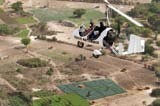
The Sterile Insect Technique (SIT) involves the release of sterile males by air to reduce the breeding of tsetse flies. Photo: FAO/Domaine de Kalahari
The project uses the Sterile Insect Technique (SIT) method of pest control, using area-wide mass releases of sterile insects to reduce reproduction in a field population of the same species. For the Senegal operation, the sterile flies are mass-produced at a facility centre in Burkina Faso and shipped to Senegal. “Since the project started, there is already less disease,” said Baba Sall, project manager and Head of the Animal Health Section in the Senegalese Ministry of Livestock. “It has not only reduced the tsetse but also ticks, which cause lots of other diseases in the area. We have noticed overall better health of the herds.” Once the eradication of the tsetse fly is complete, the farmers in the Niayes area will earn $1.6 mill on more annually as they will spend less on treating animals and gain more profit from selling milk and meat, a Government study estimates.
The SIT aims to suppress the fly population by over 99 per cent in six months. The FAO/IAEA SIT programme supports 14 African nations in their efforts to eradicate the pest.
Source:
-
U.S.: Big freeze could kill off forest pests
With recent record cold U.S. temperatures there may be a pest management upside in that the severe cold may kill off some forest pests that have been spreading. The deep freeze, the coldest recorded for decades could adversely affect pests such as the emerald ash bore, which has been responsible for killing more than 10 million trees, said Robert Venette, a research biologist with the U.S. Forest Service in St. Paul, Minnesota. 80% of emerald ash borer may have been destroyed where temperatures fell to -22 to -26°F (-30 to 32° C), he said. The emerald ash borers are spread over more than 20 states and have extended into Canada.
Also affected will be gypsy moths, which have recently moved into northern Minnesota and eat the leaves of more than 300 species of trees, shrubs and plants. The moths die at -17°F (27°C). John Barnwell, director of forest policy with the Society of American Foresters, said the cold had not been severe or prolonged enough to kill the woolly adelgid, which has devastated hemlock forests in the eastern United States. A negative side effect of severe cold is that it can damage forests by splitting or cracking limbs and stems, leaving them vulnerable to insects and other threats.
-
West Bengal, India: Tea Board to curb use of pesticides
Reported in December, in Kolkata, the Indian Tea Board is to shortly come out with a notification on regulations in regard to use of pesticides and plant protection chemicals in tea crops. “We’re introducing pesticide code developed by Tea Research Association for North India teas and by UPASI for the South Indian varieties as part of the integrated pest management exercise”, said M.G.V.K Bhanu, Chairman of Tea Board. “It will be mandatory for every producer to present before the auction, the certificates from either of the two agencies confirming adherence to the code and buyers too shall not accept any tea unless accompanied by the certificate”, he said.
Gradually all teas, whether offered in auction or sold through private deals, would be brought under the purview of the proposed code. The Tea Board has been vigorously campaigning for “Safe tea” for some time/ The move is seen as critical not only for the export market but also for domestic consumption as nearly 80 per cent of the country’s production is consumed within the country.
The majority of tea gardens were already using pesticides within the permissible limits, but so far there had been no documentation or laid down guidelines at the industry level in regard to use of the chemicals and each garden followed its own rules. The proposed code would formalise the practices.
Source: The Hindu Business Line.
-
IOBC: Pesticide side effects database launched
A database on the selectivity of pesticides has been prepared jointly by the IOBC-WPRS Working Group on “Pesticides and Beneficial Organisms” and the Commission “Guidelines for Integrated Production” to assist organizations and growers in the choice of pesticides. The aim of the database is to compile the effects of plant protection products on beneficial arthropods. The database does not aim to interpret the results. Each data is linked to a reference that can be consulted for further details and assessment.
The data compiled were extracted from three major origins: IOBC Joint Pesticide Testing Programs (JPTP), organized by the Working group in the 80s and 90s. The results of the 1st and 2nd testing program, where the methods used were not totally fully developed according the IOBC standards, have not been retained; IOBC Bulletin, proceedings of the working group meetings, from the end of the JPTP till 2008.; DAR (Draft Assessment Report) – Public version, edited by the different rapporteur member state in the context of the registration process of the active substance at the European Level, available on the EFSA website.
Any contribution to update the database with new data is welcome and can be sent to JP Jansen (labecotox@cra.wallonie.be).
For more information visit:
-
US: Top ten bed bug US cities announced
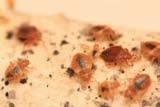 In data just released Orkin announced that Chicago was announced as the leading US city for bed bug treatments. In the South, two major cities had the biggest jumps on the list from 2012 to 2013, Nashville moved up 17 places while Charlotte climbed 18 places. At the other end of the spectrum, Omaha, Neb., Colorado Springs/Pueblo, Colo., Lexington, Ky. and Buffalo, N.Y. all dropped lower on the list. Of the five new cities on the list, three are in the Midwest – Toledo, Ohio, Peoria, Ill. and Davenport, Iowa/Moline, Ill.
New Orleans and Kansas City took the final two spots on the list as new entries. The nationwide resurgence of the bed bug population prompted the Centers for Disease Control and Prevention (CDC) and the U.S. Environmental Protection Agency (EPA) to release a joint statement in 2012 advising the public of the emerging health issues associated with bed bugs. The list released by Orkin ranks the cities by the number of bed bug treatments Orkin performed from January to December 2013, along with any shift in ranking compared to January to December 2012.
- Chicago Los Angeles (+1)
- Columbus, Ohio (+3)
- Detroit (-2)
- Cincinnati Cleveland/Akron/Canton (+2)
- Dayton (+4)
- Washington D.C. (-1)
- Denver (-5)
- Indianapolis (+6)
- Richmond/Petersburg, Va. (+1)
- Raleigh/Durham/Fayetteville, N.C. (+3)
You can find more on this and other news releases at http://www.rollins.com/news.
-
USA: Self repairing plants?
University of Missouri plant science researchers have found a receptor in plants that could be a vital component in the way plants respond to danger, including pests. This discovery may lead to herbicides, fertilizers and insect repellents that naturally work with plants to make them stronger. The researchers are focusing on the molecule adenosine triphosphate (ATP). ATP is the main energy source inside a cell and is considered to be the high energy molecule that drives all life processes in animals and humans.
Commenting, Gary Stacey, Professor of plant sciences in the College of Agriculture, Food and Natural Resources, said “Plants use these chemical signals to determine if they are being preyed upon or if an environmental change is occurring that could be detrimental to the plant. We have evidence that when ATP is outside of the cell it is probably a central signal that controls the plant’s ability to respond to a whole variety of stresses. We believe that when a plant is wounded, ATP is released into the wound and triggers the gene expressions necessary for repair,”
Stacey and fellow researchers screened 50,000 plants over two years to identify the ATP receptors. By isolating a key gene in the remaining plants, scientists found the receptor that aids in plant development and helps repair a plant during major events. Future research will focus on how this receptor works with ATP, its protein structure, how it reacts to pests and how it may signal growth. The study, “Extracellular ATP signalling in plants,” was published in Science.
Source: http://cafnrnews.com/2014/01/self-repairing-plants/
-
UK: Jonathan Peck Memorial
Without doubt the life of Jonathan Peck made an important impact that spanned the entire Pest Management Industry and has left behind a valuable legacy, both professionally and personally. Jonathan’s accomplishments will be celebrated at 11am on 11th April 2014 at Southwark Cathedral with a reception at Chadwick Court in the afternoon where presentations of his work will be given. A drinks reception will be held at 5pm.
To register to attend, please visit: www.jonathanpeckmemorial.com
- And finally…… Netherlands: Flying rat paté anybody?
A butcher in the Netherlands capital said he turns the pigeons delivered to him by a pest control firm into pate for human consumption. 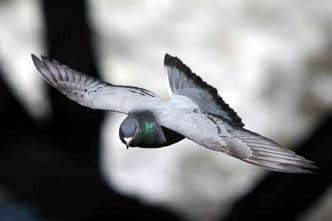
Poulterer Thomas van Meel told the Parool newspaper he receives pigeons from a private pest control firm at his Amsterdam shop and he turns “a couple of hundred” of the birds into game pate which he then sells to the public.
Parool said the pigeon processing deal is carried out without the knowledge of public officials, but van Meel said there is no danger in eating the pigeon meat. “We carry out very tight screening on everything that comes in,” he said.
Source: Het Parool .
Published in International Pest Control – January/February 2014 issue.
Category: International Pest News, news in brief